You want international work experience. You want the CV line, the skills, the stories, and the perspective shift that comes from working in another country. But when you look at the price tag of a traditional internship abroad, it’s hard not to wonder if there’s another way.
There is. It’s called a hybrid internship, and it’s worth understanding properly before you rule out going abroad altogether.

What a Hybrid Internship Actually Is
A hybrid internship combines two phases: a remote working period and a shorter in-country placement. Before you travel, you’re already contributing. You connect with your host organization, get up to speed on ongoing projects and start building relationships with the team you’ll eventually meet in person. The work begins before you even pack a bag.
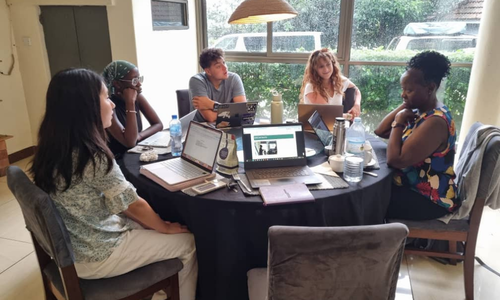
Then you go. For a focused period, you’re on the ground, embedded in the work, experiencing the culture and doing the kind of hands-on collaboration that no video call can replicate. After your placement, many hybrid programs continue with a remote phase, allowing you to wrap up projects and maintain momentum from home.
The result is an internship that feels complete, not like a shortcut.
Take the NGO Management Internship in Cape Town, South Africa as an example. Hybrid interns start remotely, getting up to speed on the organization’s campaigns around period poverty, menstrual health and sexual reproductive rights before traveling to Cape Town to work in person with the team. By the time you arrive on the ground, you already understand the mission, know the people and can contribute meaningfully from day one rather than spending your first weeks finding your footing.
How the Cost Compares
One of the most obvious advantages of a hybrid internship is the financial benefit. Traditional in-person internships abroad typically require you to cover flights, accommodation, food and program fees for the full duration of your placement, which can stretch across several months. When you add it all up, the cost is significant.
A hybrid internship changes the equation. Because your in-country placement is shorter, your travel and accommodation costs are reduced considerably. You’re not funding months of living abroad. Instead, you’re funding weeks, with the rest of your time working remotely from home.
For students managing tuition fees, part-time jobs, and limited savings, that difference matters. A hybrid internship makes international work experience genuinely more accessible without stripping out the parts that make it valuable.

What You Still Get That a Fully Remote Internship Can’t Offer
This is the question worth sitting with: if saving money is the goal, why not just do a fully remote internship?
Because something is lost when you remove the in-person element entirely. Remote internships are valuable, but they tend to stay surface-level when it comes to cultural immersion. You’re working with an organization in another country, but you’re still doing it from your bedroom. The context, the relationships, and the lived understanding of the community you’re contributing to don’t travel through a screen.
With a hybrid internship, you get the in-person experience where it counts most. You meet your colleagues face to face. You understand the environment your work is trying to address. You build the kind of cross-cultural communication skills that employers actually look for, because you’ve genuinely had to use them.
It also gives you something that is hard to replicate in any other format: real lessons and experience you can reflect on and draw from long after the placement ends. These are the kinds of stories that make candidates memorable.
Who It Works Best For
Hybrid internships are not for everyone, and that is okay. They work particularly well for students and recent graduates who want international work experience but are hoping to intern within a tight budget. They also suit people who have existing commitments at home such as university, part-time work, or family responsibilities that make a long absence difficult.
If you are new to working abroad and want a structured, supported first experience, or if you want something more substantial than a remote role on your CV but are not ready to commit to a full term overseas, a hybrid internship is worth taking seriously.

Ready to Find Your Hybrid Internship?
Roots offers hybrid internship programs across Africa, Europe, and beyond, designed around meaningful, real-world work with organizations that need your skills. You’ll contribute remotely, travel for your in-country placement, and come home with experience that goes well beyond what most graduates your age can point to.
Browse Hybrid Internship Programs and find the one that fits your goals, your budget and your timeline.